Over 103 years have passed since George Anastasios Souris was born in St. Louis. Those ten decades told a remarkable story of a man who saw and participated in a lot of history in his community, nation and the world. He died on April 28, as I was halfway through writing this column. He had entered hospice, and I was hoping against hope he would hang on to see this.
George was among a rapidly shrinking group coined the “Greatest Generation” for having grown up through the worst economy in U.S. history, followed by serving in the worst conflict in human history, only to return home to help build the greatest nation in history. Quite a feat. Unless your family immigrated to America after the 1930s, you likely have an ancestor in this group.
The son of immigrants from the Greek island of Kythera, George’s father owned a candy shop on Manchester in the city. As a child of four, George and his family watched Charles Lindbergh lift off from Lambert Field on the way to his historic transatlantic flight. Little did he know he would spend five decades of his life living and working near that location. Five months later, while playing on his back porch one afternoon, he watched the sky turn dark as cans, debris and dust began flying into the air. His mother ran to pull him inside as the Great Tornado of 1927 roared by, leveling 200 city blocks and killing 80 people. It was good that his mom reacted quickly; he had a lot of life left to live.
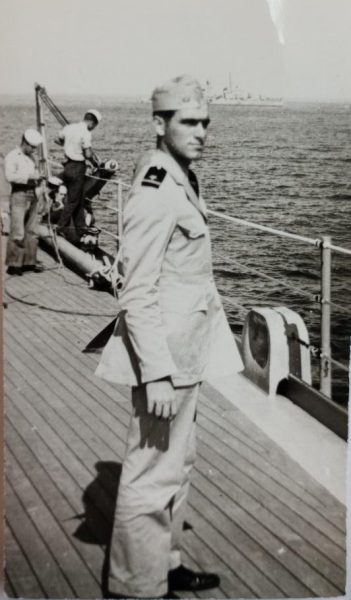
After graduating from McKinley High School in 1943, George received the call to serve along with millions of other young men, reporting to Jefferson Barracks and enlisting in the Navy. First trained as an airplane mechanic, he then enrolled in the University of Oklahoma to become a commissioned officer and received a degree in journalism. He remained in the Navy after the war, patrolling the Eastern Atlantic and Mediterranean on the U.S.S. Columbus, a 675-foot, 29,000-ton cruiser, stopping at nine countries and thirty-six ports of call. He eventually rose in rank to Lt. Commander before retiring from the reserves in 1966. In 2019, he participated in a Greater St. Louis Honor Flight trip to Washington, D.C. to visit the National World War II Memorial.
Returning home from active service and seeking work, George drove out to Lambert Field and the nearby hangars housing McDonnell Aircraft. After an interview, he was hired on the spot. He would work 33 years at McDonnell Douglas (today Boeing) as a technical writer, editor and administrator. He coauthored the specs for the Gemini spacecraft used in America’s early space program.
Proud of his Greek heritage, he later visited Ellis Island in New York, bringing back a replica of the Statue of Liberty he placed on his home mantle. He kept it with a replica statue of “The Lone Sailor” that appears at the U.S. Navy Memorial in Washington, D.C. George may have been proud of his ethnic heritage, but, as he once told me, he was first and foremost an American.
In his generation’s jargon, George was a “stand-up” guy; honorable, straightforward and dependable, offering to help without being asked. He was a loving father and grandfather. A dedicated church volunteer, he sang in the choir for decades with his wife, Anne. He was a Sunday School teacher and chaired the annual Labor Day Greek Festival. He belonged to a variety of social and fraternal groups during a time when social life was experienced face-to-face rather than through Facebook or Instagram. He didn’t believe in holding grudges, understanding life was to be enjoyed, not lived in bitterness.
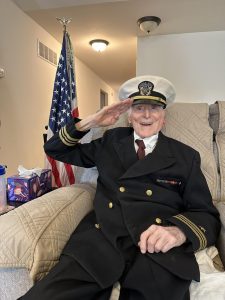
In November 2018, I took George to the reopening of the renovated Soldiers Memorial downtown. He was 95. As we took a seat among the crowd, the museum staff asked about him, then swarmed him, wanting to hear his story. He humbly said he was fortunate to be there when many of his fellow servicemen never returned. He was a rock star.
George Souris was among the best of a great generation. As we prepare to honor the sacrifices of those who have passed, take time to thank some who are still here, while you can.