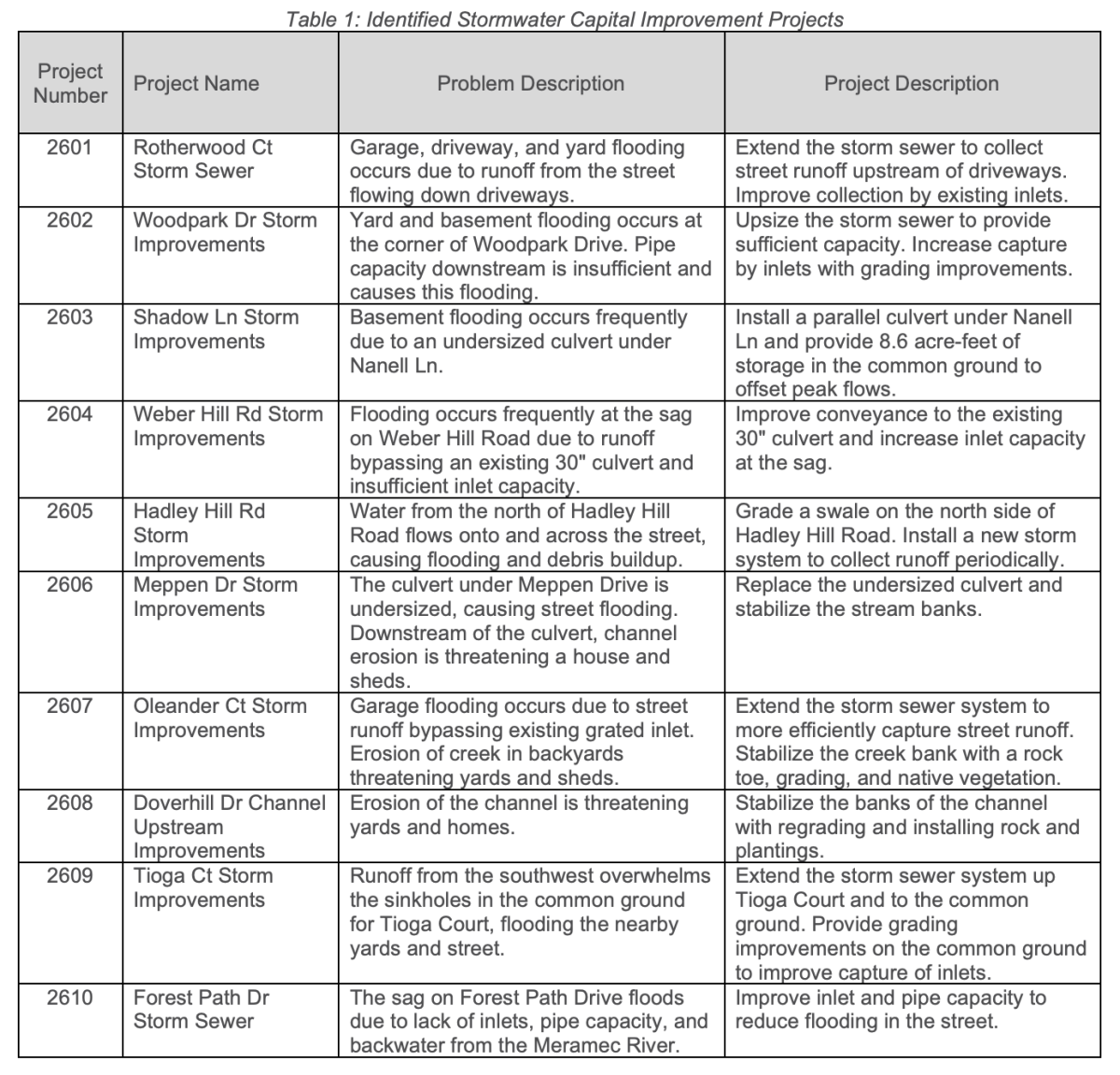
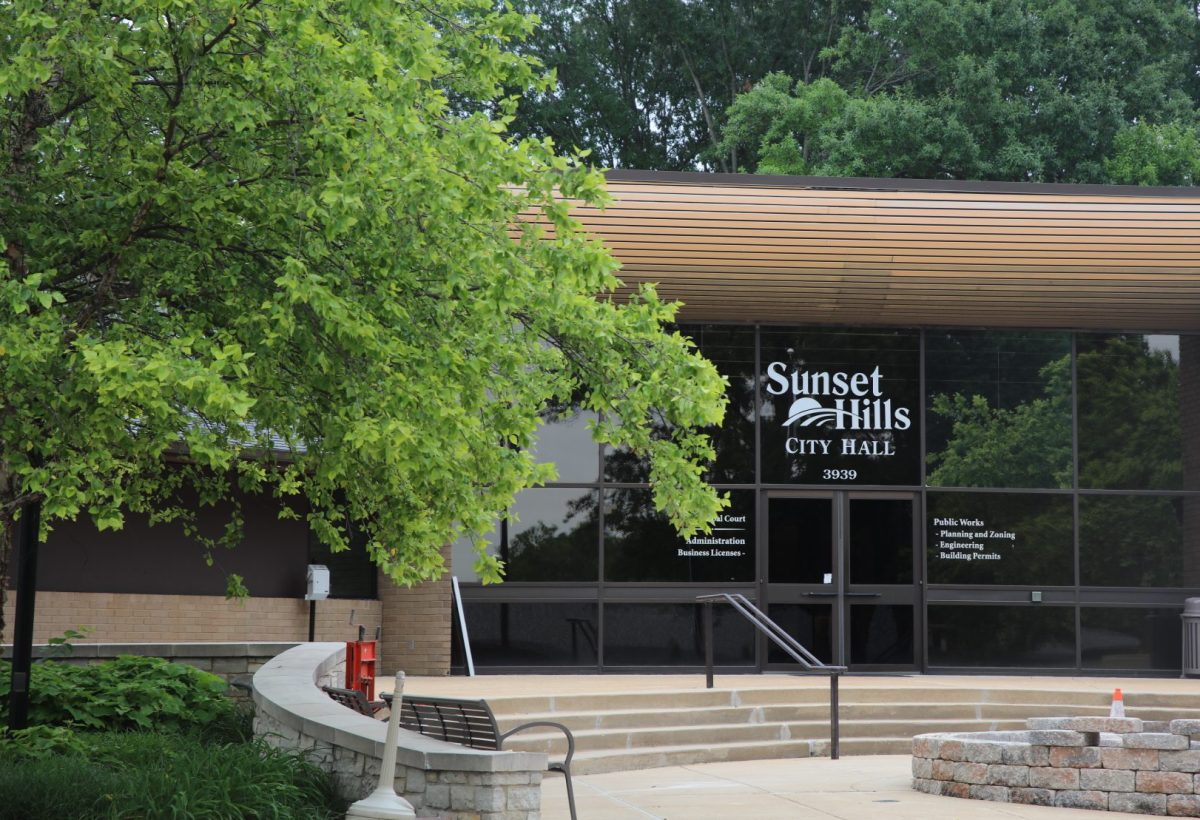
At the Sunset Hills Board of Aldermen meeting on May 12, the board approved a stormwater master plan that outlines 10 potential capital improvement projects in the city. The plan was put together by the civil engineering firm HR Green in collaboration with Sunset Hills.
Ward 4 Alderman Cathy Friedmann said during the meeting that she would be interested in the board’s pursuit of putting stormwater projects in next year’s budget, using money from the parks and stormwater sales tax fund.
“If that is the board’s desire, there is money in the balance to do that,” City Administrator Brittany Gillett said. “We will deficit spend, which we are in a healthy position to do.”
Friedmann said she wanted to discuss further what percentage of that fund could be used for these stormwater capital improvement projects — perhaps 50%, she suggested, to balance with the money used for parks projects.
Gillett brought up the concern that most of the money in that fund, currently, is funding capital improvement projects in the Parks Department. To use 50% of the parks and stormwater sales tax revenue for stormwater projects would lessen the amount of money that could go to parks, and possibly prevent the completion of projects outlined in the Sunset Hills parks master plan.
“We’ve made promises to the residents for parks, but we’ve been collecting $1.8 million dollars for the stormwater parks fund, and I don’t see that, for 20 years, any of it has gone to stormwater,” Friedmann said.
“I don’t think it has. I think you’re absolutely correct,” Gillett responded.
If Sunset Hills were to complete all 10 capital improvement projects, the expected cost would be $5,347,018. Funding for these projects could come from a variety of sources, including the city’s parks and stormwater sales tax. The Operation Maintenance Construction Improvement (OMCI) District could provide $38,000, according to the report, and the Municipal Stormwater Grant Program through the Metropolitan St. Louis Sewer District could fund $100,000 per year.
Other funding sources could include Section 319 Nonpoint Source Subgrants and Hazard Mitigation Assistance through the Federal Emergency Management Agency (FEMA) and the State Emergency Management Agency (SEMA), each for less than $50,000.
Each of the 10 projects was given “project benefit points” by how necessary or useful the project would be, and then the projects were assigned a “benefit-to-cost ratio.” This ratio is how the projects were ranked. The projects, listed by ranking, can be seen below.