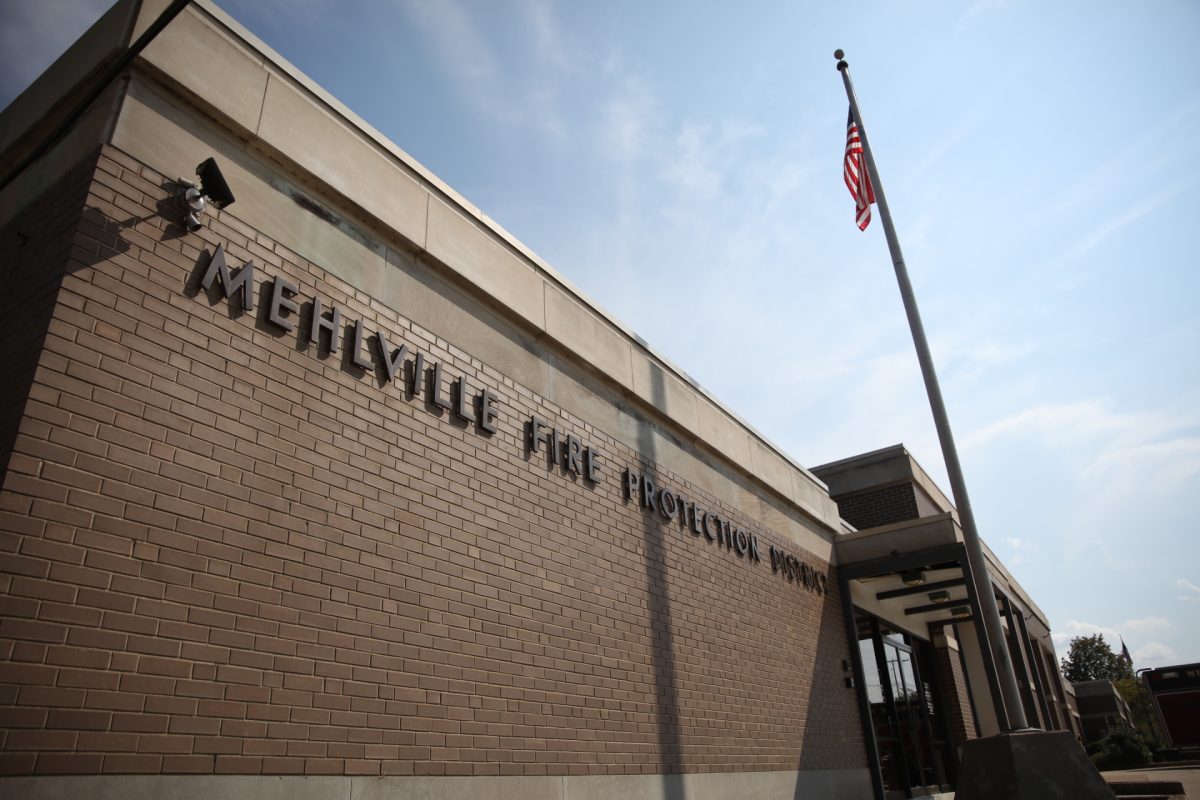
With the state legislative session over, the Mehlville Fire Protection District (MFPD) took time at its June 8 Board of Directors meeting to discuss how new legislation may affect the fire district. Steven Carroll of Steven R. Carroll & Associates, a legislative consulting and lobbying firm, presented a report on legislative outcomes to MFPD directors.
Missouri legislators filed a record number of bills this year: 3,110. Of those, 83 House and Senate bills passed, along with 17 budget/appropriation bills; Governor Mike Kehoe had until July 15, after The Call’s press time, to decide which to sign or veto. Carroll says there are three bills that MFPD has paid special attention to.
The first bill that Carroll highlighted is House Bill 2372, which was sponsored by Rep. Tara Peters from the 122nd District. It is a large healthcare “omnibus” bill that includes legislation like instating awareness days — such as designating January as “Blood Donor Awareness Month” in Missouri — as well as a slew of legislation regarding different areas of healthcare, from doula services to the “Food is Medicine Act.”
But MFPD’s sights were focused on the part of HB 2372 that dealt with community paramedics. The bill language reads: “Any ambulance service shall enter into a written contract with another ambulance service provider to provide community paramedic services in their ambulance service area, as that term is defined in section 190.100. The contract that is agreed upon may be for an indefinite period of time, as long as it includes at least a sixty-day cancellation notice by either ambulance service.”
Ambulance services that wish to provide community paramedic services outside of its area must make contractual arrangements with any ambulance services that serve that area. Carroll said this is where MFPD has problems with the bill.
“This new language was never filed as a stand alone bill and the public never had the ability to testify on the language in a public hearing,” Carroll stated in the report. “We strongly oppose this language. We went to the House sponsor of the bill and she assured us that she would take it out of the final version of the bill, however she did not follow through on her commitment to us.”
He added, “The bill sponsor stated they did not have time to go back to conference to make changes in the community paramedic language, which was not true. There was time to go back to conference, but they didn’t want to take the risk of possibly running out of time in case there was a Senate filibuster.”
MFPD was also paying attention to Senate Bill 975, sponsored by Sen. Rusty Black of the 12th Senatorial District, which modifies provisions relating to ambulance districts and their governance processes, “giving county commissions more flexibility in structuring election districts and providing new procedures for adjusting board size, filling vacancies and reorganizing subdistricts.” It also streamlines annexation and consolidation processes for the district.
When SB 975 went to perfection in the Senate, community paramedic language was added that MFPD supported. But when that language eventually changed in a way that the fire district did not support — language similar to that in HB 2372 — MFPD representatives fought to strip that language off the final bill.
“After working with Rep. (Dave) Hinman, Senator Black and Rep. Jeff Farnan we agreed to send the bill to conference, strip off the community paramedic language, and pass the underlying bill clean,” Carroll said. “That is what they did and they sent the bill to the governor.”
The third and final bill of interest that was sent to the governor was Senate Bill 1421, sponsored by Sen. Nick Schroer the 2nd Senatorial District. According to Carroll’s report, the bill began as a bill centered on drones and unmanned aircraft, “but ultimately turned into a 120 page public safety omnibus bill.”
Within the bill is a provision about fire safety, which requires the Division of Fire Safety within the Department of Public Safety to adopt certain minimum requirements for fire safety in state-inspected facilities: fire protection, means of egress, fire-resistance, detection and alarm systems, suppression systems, emergency operations and other related safety measures.
The Division of Fire Safety must review these standards every five years, updating if necessary. These updated fire safety standards will be requirements in state-inspected facilities starting on Jan. 1, 2028.