At a meeting slated for Oct. 22, the Sappington-Concord Historical Society (SCHS)’s members will vote on whether to transfer ownership of the Ross Wagner property — a historical farm with beginnings as a community garden in the 1800s — to Lindbergh Schools.
Now, as the Board of Directors plans to restrict some members of the historical society from voting, members have raised legal and ethical concerns surrounding the vote. Some suspect the procedures around the transfer could break state law; others speculate about what Ross Wagner intended for his property when he bequeathed it to SCHS in his last will and testament.
“The smell test (members) were getting is that something wasn’t being done right,” said John Sebben, who has worked extensively with 501(c)(3)s like SCHS. “That was based on their perception of non-transparency, rushing things through, and they said that some members would be prohibited from voting.”
Beyond the imminent voter disenfranchisement, a culture of non-transparency seems to have blossomed within the historical society. Members say there have been no agendas, meeting minutes, finances or documentation presented to make an informed decision.
A group of members has been working to postpone the Oct. 22 vote in hopes that they can sort out the due process and ensure the society’s membership is informed about the decision. This group is hosting a town hall on Oct. 20 at 6:30 p.m. in the Historic Sappington House’s Library Americana, 1015 Sappington Road, to discuss the issue.
“It’s not a debate. We’re just making sure there is an informed membership about what is happening right now and what opportunities you have to have an opinion and act on it,” said SCHS member Kitty Lohrum.
The Sappington-Concord Historical Society’s Board of Directors did not respond to The Call’s requests for comment.
The Ross Wagner property: A burden or a blessing?
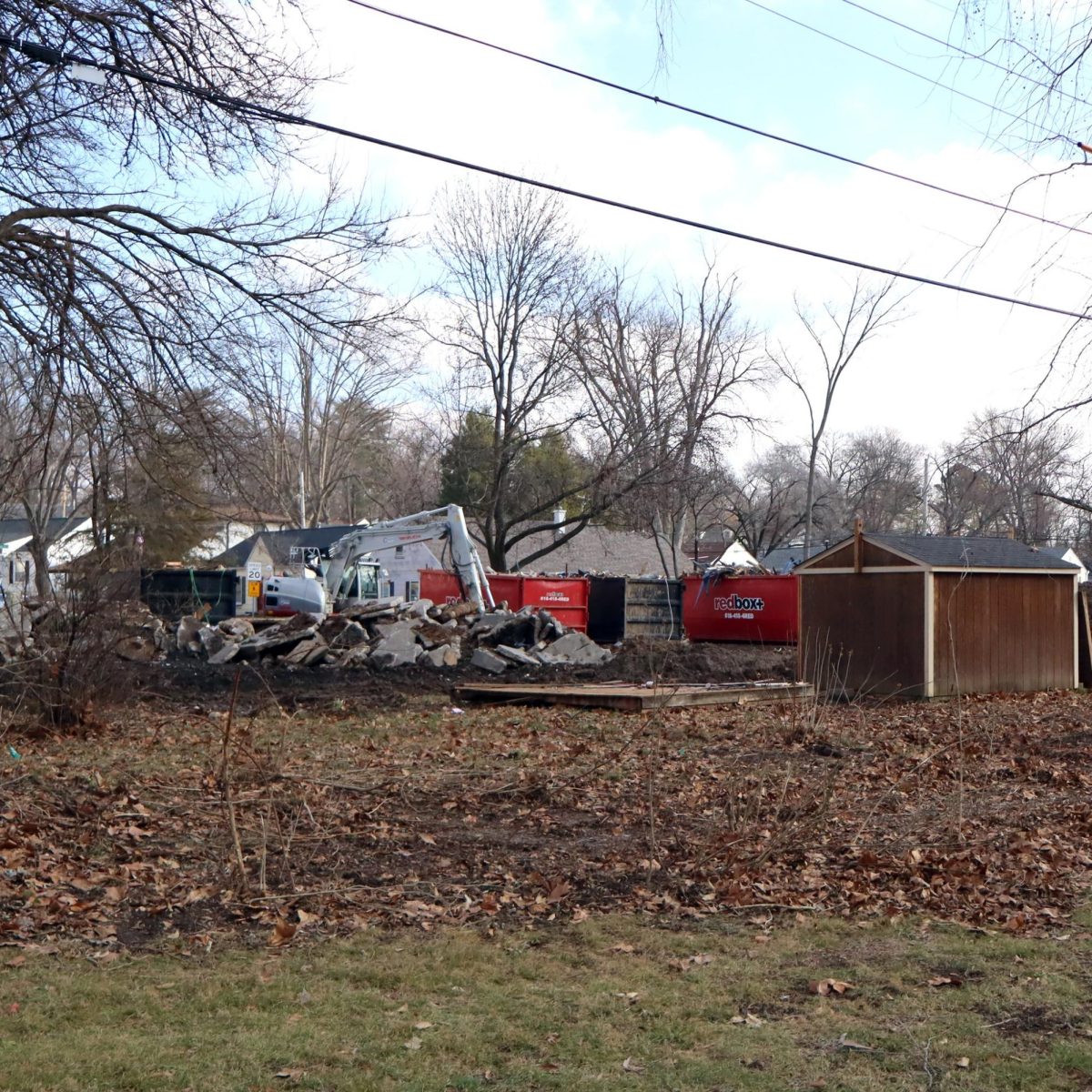
The 1.58-acre property that has caused such a hubbub is a tucked-away parcel at 9148 Sappington Road, down a short, nondescript driveway. Some might drive by and see a house like any other, but in truth, it’s a piece of South County history that the Wagner family and the Sappington-Concord Historical Society have striven to keep alive.
What was once a cluster of small garden farms that grew fruits and vegetables in the 1800s became the Wagner family home in the early 1900s. “The house is an example of how living evolved over the course of the 20th century,” states a SCHS newsletter about the property’s history. The home and land belonged to Ross Wagner, a founding member of the historical society, before his death in 2016, and ownership officially transferred to SCHS in 2017. It is currently valued at $382,000 to $390,000.
For years, the property has been “barren”, as former SCHS president Stephen Hanpeter puts it. Hanpeter was president of the board from 2012-2019, when the property was acquired. He says there was initially a plan to develop it; a member named Noelle Wagner (no relation to Ross Wagner) even ran a farmers market on the property around 2020-2022, until personal events caused her to discontinue the event.
“As someone who works with historical societies — and I have, and not just this one — there’s a large point of differentiation between this (society) and all the others (because of the farm),” Hanpeter said. “If a historical society has a particular way to appeal to the public and to get support, that’s a good thing, and they should be working that point as far as they can.”
But according to members Lohrum and Brett Tintera, the aging Board of Directors has repeatedly called the Wagner property “a burden” in meetings. The board has exhibited reluctance to maintain the historic farm.
“They used the word ‘burden’ over and over and over again,” Lohrum said. “‘This property is a burden.’ That word was used over a dozen times.”
The board approached Lindbergh Schools in February to discuss transferring ownership of the Wagner property to the district. Lindbergh plans to use it for crop production and education as part of the Lindbergh Farmers Club. This addition would join the recent purchase of the now-closed Concord Farmers Club property on Concord School Road, where Lindbergh plans to build its own facility.
“Lindbergh Schools has had a long relationship with the Sappington-Concord Historical Society going back many years,” Lindbergh’s communications manager Beth Johnston said. “We are grateful that the society’s board has considered our school district to be the potential recipient of the Ross Wagner property.”
But a group of SCHS members has come forward in strong opposition of the transfer to Lindbergh Schools. They have their own dreams of revitalizing the space.
According to Lohrum, Hanpeter and Tintera, multiple alternative proposals have been presented to the Board of Directors that would allow the Wagner property to stay under the ownership and care of the Sappington-Concord Historical Society. Tintera, himself, has worked on a few. All these proposals, members say, have been rejected without reasoning for their decision.
“The board has received a handful of proposals, which don’t get very far in the conversation, and we really can’t figure out why,” Tintera said. “Our proposal is with insurance. It takes care of utilities. It takes care of the maintenance. It takes care of repairs. It takes care of literally every cost that is attributed to the property, just so we can take the burden off of the board.”
And these proposals aren’t being shot down for lack of member support. According to Sebben, there has been an influx of new, young members in recent months — he estimates anywhere from 30-50, though no one knows for sure. Many of them are younger than the Board of Directors, who Lohrum says are primarily in their eighties, and hungry to help.
Tintera, who has been personally recruiting new members, says he knows at least 20 people who are willing to volunteer to maintain Ross Wagner’s home and farm. He calls the property “a blessing.”
“The board is relatively elderly and doesn’t know what to do with this,” Sebben said. “Maybe six months, eight months ago, this was truly legitimate. They were like, ‘We can’t handle maintaining a farm.’ But now, there’s several dozen younger people — people in their forties, thirties. If the board would allow them to be full members, they could contribute and maintain (the property), but it sounds like the board just wants to be done with it, which is sad.”
Potential proposals have included using the space for a farmers’ market, a pumpkin patch or even a Christmas tree farm. Other suggestions have pointed toward a garden of native Missouri plants or returning the property to its roots as a community garden with an orchard and chicken coop. Tintera says that neighbors and local schools, including Lindbergh, could join with SCHS to revitalize the space.
“My kids go to Lindbergh, I pay taxes to Lindbergh, I coach at Lindbergh. I’m all about Lindbergh, but we feel like they don’t need to be given this property for them to be a part of the property,” Tintera said. “We want them to be able to come here and do all kinds of great things, but let’s keep it in the trust that it’s established in, which is a 501(c)(3).”
Lohrum, who has spearheaded many of the efforts to keep the Wagner property under SCHS ownership, sees the space as a walkable place for children and families to learn about history, food and nature.
But dreams for 9148 Sappington Road will have to wait until after the Oct. 22 vote, when members — or, at least, those who have been permitted to vote — will decide whether the property goes to Lindbergh Schools.
“We’ll figure out what to do with (the property) after we confirm that we’re not just giving it away because we’re tired and it’s a burden,” Lohrum said.
Sebben adds, “Lindbergh has no fault in this whatsoever. They’re an innocent bystander — I do want to emphasize that. And if Lindbergh does get this property, I know they would be good stewards of it. It would just be a different situation than all these new members being able to do what they want to do.”
Voter disenfranchisement and non-transparency
In Kitty Lohrum’s efforts to keep the Ross Wagner property, she has taken to social media, reached out to community members and hosted a meeting in her home to discuss the issue. But even though she is a member of the society, she has been explicitly told by board member Sue Steinnerd that she will not be allowed to vote on Oct. 22.
Lohrum isn’t the only one. According to Hanpeter and Tintera, the board voted on Sept. 11 that any members who joined the society after that time would be excluded from the vote on the property transfer. That could be a vast number, considering how many people have joined SCHS in recent months. But, as with many things regarding the historical society, no one knows for sure. An official list of eligible voters has been requested by members, but the board has procured nothing.
After the Board of Directors decided to restrict the vote, it sent a letter to SCHS members that a meeting would be held on Oct. 1 to discuss the Wagner property and its transfer to Lindbergh. The letter made no mention about voting eligibility or ineligibility.
Sebben believes there may be a legality issue with restricting who would be allowed to vote, since — by the society’s bylaws — SCHS has no “new member” or “provisionary member” class. This would likely violate the state law RSMO 355.186, which reads, “All members shall have the same rights and obligations with respect to voting, dissolution, redemption and transfer, unless the articles or bylaws establish classes of membership with different rights and obligations with respect to any other matters, except as set forth in or authorized by the articles or bylaws.”
“They’re rushing (the property transfer) through, and in doing so, they’re violating their bylaws and violating state law,” Sebben said.
Alongside the potential of voter disenfranchisement, Sebben and Lohrum are worried about an overarching lack of transparency surrounding the deal. There have been no publicized agendas or meeting minutes regarding the discussions on the Wagner property; members say no one has seen documentation of the society’s finances in years, nor Ross Wagner’s will for the property or even the agreement with Lindbergh.
“No one knows what the will even says,” Sebben said. “The will might even have a clause in there that says, ‘You can’t do something like this.’ I don’t know. The financials could have some answers. Again, I don’t know. There’s no information going out.”
Lohrum has made several requests for these documents and still has little to show for it.
“I can say they’re not sharing the minutes the way that they should, or they’re not sharing the financials the way that they should,” Lohrum said. “But I don’t want to stand on formalities. I want to say the right thing to do is to give more information so we can make an informed decision. Even if you don’t let me vote, other members don’t know what’s going on.”
Besides a Facebook post and an email on Oct. 16 — less than a week before the vote — Sebben and Lohrum report that there has been little official documentation that this vote will happen on Oct. 22. Information on the vote was not published in the society’s quarterly newsletter that was sent to members, and no meeting agenda has been published to SCHS’s website.
“There are almost a hundred members, and I guarantee you, they don’t know that this is happening,” Lohrum said.
Sebben believes the Oct. 22 vote might require a two-thirds majority to pass the Wagner property to Lindbergh, as outlined in RSMO 355.656. He worries the board might overlook the state law by accident and set the vote for a simple majority. He says he plans to “make a point of order” should that happen, although he confesses, the next question is, “What do we do if they ignore that?”
The protesting group of members hopes to see proper documentation and an informed membership body before the Oct. 22 vote, but time grows slim. Lohrum hopes to postpone the vote until there is more information. Sebben admits that it’s possible the Board of Directors arrives at the Oct. 22 meeting with a binder full of all the necessary information, though he doubts that will come to pass.
“I just feel like the right thing needs to prevail, and nothing good happens in the dark,” Lohrum said.
Members prepare for the vote
Lohrum and Tintera have both noted that, through their efforts to keep the Wagner property, they have had no intent of slandering the Board of Directors, who have cared passionately for the history of South County for many years.
“Whatever happens next, it’s really important to me and everyone I’ve been working with to honor and include — however they want to be included — the people who have carried the torch this far,” Lohrum said. “Nobody wants to snatch it out of anybody’s hands. We’ve got to find an amicable way to carry this forward without denigrating or minimizing the contributions of the people who are in charge right now.”
Alongside the vote to transfer the farm to Lindbergh Schools, there is supposed to be a vote about new seats on the Board of Directors on Oct. 22. Tintera sees this as a way to get new, young life on the board and set new directors in a position to learn from those who have sustained the Sappington-Concord Historical Society for this long.
“It’s a big deal,” Tintera said. “There’s people that want to serve on the board. They want to give their time, they want to volunteer. We’re trying to get new, young, active board members with vision and drive who are like, ‘Let’s do something amazing.’”
Until then, this group of members continues to push for information. Lohrum has urged eligible voting members to show up for the Oct. 22 vote and make their voices heard. That vote will take place at 6:30 p.m. in the cafeteria of Lindbergh High School, 5000 S. Lindbergh Blvd.
For those who are hearing about this topic for the first time, the Oct. 20 town hall at 6:30 p.m. at the Historic Sappington House will be a time to get informed and find out what opportunities exist to protest an unfair vote.
For those coming to the Monday night town hall, Lohrum gives a last word of advice. “Because it’s starting to get dark early nowadays, and I guess there’s no electricity there, I was told to wear close-toed shoes and bring a flashlight,” she laughed. “We’re roughing it, but it’s history.”