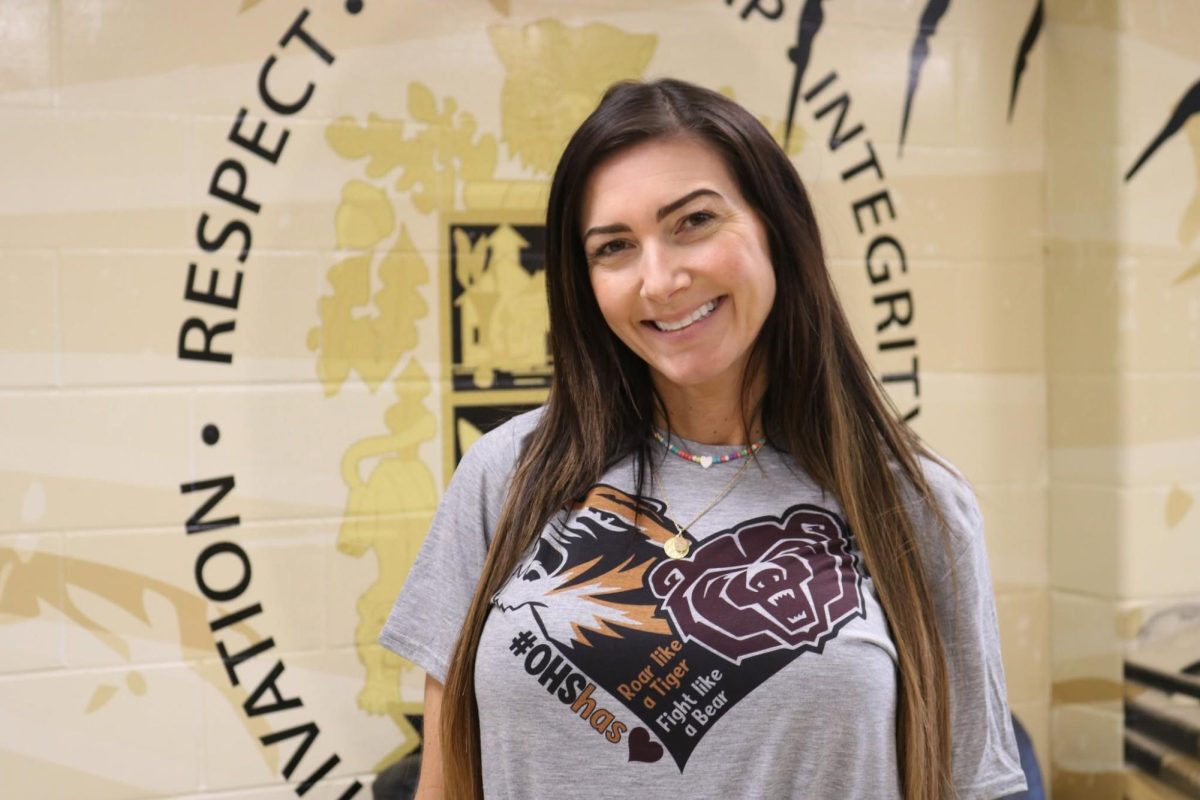
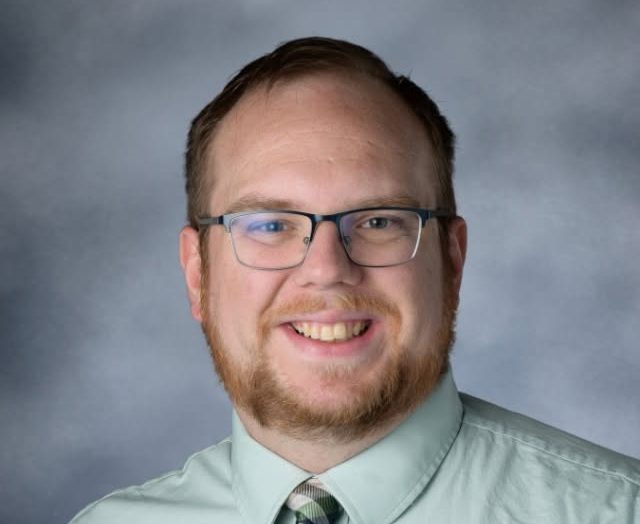
The four candidates in the running for the Lindbergh Board of Education attended a forum sponsored by the League of Women Voters on March 11 in which they shared their views and answered questions from the community.
This upcoming election, scheduled for April 7, will see the four individuals vying for three open seats on the board. The candidates include three incumbents — board president Matt Alonzo, director Christy Watz and board treasurer Andrew Lawson — along with Richard Breeding, a former Crestwood alderman.
Opening statements
The forum began with the candidates’ opening statements, which they were given two minutes to make. They appeared in the order in which their names will appear on the ballot.
Alonzo was up first. He emphasized the district’s ability to prepare students for the real world, his background as a teacher and his desire to give back to Lindbergh through continuing to serve on the board.
Breeding followed, discussing his time on the Crestwood board as an alderman and, for a brief stint, the acting mayor. He also mentioned his family’s history with the district — his father, uncles, brothers, children and Breeding himself all attended Lindbergh — as well as his time as an employee at the district. Another point discussed was his Facebook page and the conflict that had surrounded it in the days leading up to the event.
“I haven’t experienced the hate, the threats, the misinformation that I’ve experienced over the last five days via Facebook. Take that for what it’s worth, but I’m embarrassed on everything that’s going on Facebook — both sides. It’s just out of control,” Breeding said. “They just want to find a gotcha moment or something. It’s just weird.”
Watz was next, who, like Alonzo, discussed the district’s strong academic offerings, using her children who are excelling post-grad as examples. She also shared the things she is most proud of from her time on the board, including facility updates, curriculum development and creating a positive environment for staff and students alike.
Lawson wrapped up the openings, discussing being from a family of educators and focusing on fiscal transparency, as well as his personal background and journey to the district.
“I’m a husband, a disabled Army combat veteran, an IT leader and a small business owner, but my most important title is Lindbergh dad. Our family’s journey here was intentional. We moved to this district because our previous school wasn’t meeting my child’s needs. We were looking for a place that didn’t just see a student as a number, but as an individual,” Lawson said. “I want every family to have that same welcoming experience and know that their child is going to thrive here.”
Per forum moderator Kathleen Farrell, 84 questions from community members were received. Though they could not all be asked, the majority of topics or issues brought up were covered. Candidates were each given one minute to respond.
Most important issue to each candidate
Breeding started the question portion of the evening, answering that the most important issue to focus on is taxpayer dollars being spent wisely. Watz answered that funding and focusing on state legislation that could impact said funding was her top focus, and Lawson, who followed, echoed this, emphasizing “being prepared for whatever comes out of Jefferson City.” Lawson also mentioned delivering what the district promised in regards to Prop R projects. Alonzo, too, agreed with focusing on funding, though also mentioned continuing to support real-world learning opportunities for students.
Special School District
Special School Distrct (SSD) was the topic of the next few questions as there is a bill in the legislature — House Bill 2933, sponsored by Rep. Brad Christ, R-Sappington — which would allow a Board of Education to decide by majority vote whether or not to withdraw from SSD. If approved by the board, the question would then go to district voters. Per bill language, “Such resolution may include a proposal to impose an additional levy to provide for special education, vocational education and technical education programs and services.” In other words, services would be brought in-house and managed internally as opposed to through the countywide program.
Watz, Lawson and Alonzo expressed support for the bill, while Breeding opposed.
Concrete controversy
Another topic that seemingly intrigued the public centered around the district’s 2020 construction of the high school’s new gym, the Green Gym. Though this occurred years ago, it has recently become quite controversial, with some community members saying the district “wasted $12 million.”
For a simplified background, after Lindbergh’s first Prop R passed, the district began construction on multiple projects throughout its buildings, including a new gym at the high school that was not “originally on the books.” Before construction of the new gym began — per board meeting minutes from Jan. 18, 2024 — the district was told by the county that its new structure would have to follow the 2009 code.
“We were told 2009 code. Well, there was a thing called the pandemic that happened that slowed permitting down. We had to have our permit in our hand, I believe by July 1 of 2020. Well, you know what was going on at that time. So we really didn’t have much of a choice. We had to move forward with the project,” Lindbergh superintendent Tony Lake said at the board’s January 2024 workshop.
Lindbergh Schools Chief Communications Officer Beth Johnston clarified that the entire LHS project was completed in communication with, and with approval from, St. Louis County. No work was done on the Green Gym without a permit, she said.
“We had a big surprise with our permitting process and the new rules. We went into the prop with a certain code and were pretty much promised that that code wasn’t going to change, but it did change and there was new requirements from the county on what we had to do. One of the biggest was the storm shelter,” Lindbergh Chief Financial Officer Joël Scheible said at the board’s January 2024 workshop. “We issued COPs, which are certificates of participation to borrow to one, cover our surprise and two, to just finish the project at the high school. So that was $12 million.”
“The $12 million increased scope of work, which was funded by certificates of participation, was approved by the BOE in December 2021,” Johnston further explained. “The reason we increased the scope of work was because St. Louis County originally assured us that the 2009 code for storm shelters would apply to the high school. However, that changed mid project and we were required to add more storm shelter space. The increase in scope to address these code changes was approved and discussed in open meetings.”
At the workshop in January 2024, the decision behind issuing COPs did come up, with Scheible clearing up the process.
“It’s not like I make a decision to go finance something … we work with the board on the idea,” she said. “Schools are highly regulated. We have our policy. We have state statute. Pretty much everything we do, there’s a process … there’s a lot of rules and regulations on how schools manage their money and how they borrow money.”
At the recent forum, Watz, who was up first for this question, began explaining the situation to those unfamiliar.
“Months upon months it took for us to get permits. And we asked the question, ‘Do we need to have a storm shelter or can we count one of our other two gyms as a storm shelter?’ The answer was, ‘No, you don’t need to add another building to make it a storm shelter.’ Then a few months later, as we started construction and the concrete was poured, the county came back and said, ‘You need to add a storm shelter,’” Watz said.
“I think the biggest misconception out of all this is the thought that we had to take $12 million from somewhere else to pay for this. The $12 million came out of the bond that we had already had,” Alonzo added. “We had to pivot some of our construction to build the (green) gym, so we moved away from tearing down the (high school) library, which ended up being a great space for our gifted program. We abandoned that project in order to meet the code that was sprung upon us at the end.”
Breeding closed out this section, stating he “did not buy anything” that was said.
“I redid my basement over the last few years. I didn’t move without the county or Crestwood telling me it’s okay. So, I’m sorry, I don’t buy anything. I just don’t. And for someone to say ‘the $12 million secret’s out’ — watch the video (of the January 2024 board workshop). Everybody’s laughing about the $12 million mistake, or the surprise. It’s not funny,” he said.
Free early childhood education
Ten community members discussed the cost of early education in the district, inquiring if the candidates would be in favor of making it free. Though the candidates expressed that offering the education for free would be great, it is not a fiscally responsible thing for the district to do.
Public comment at board meetings
Current district policy allows any individual or group who would like to speak on an agenda item to do so at meetings, as long as they provide their name, address and the agenda item of interest. Those wanting to address the board on anything not specifically on the agenda, however, face a trickier process, in which they are required to submit a written request to do so during a future board meeting.
“If you want to speak on a non-agenda item, you do first need to fill out the form and then speak to somebody in the district, whether it’s a superintendent or the director of curriculum and instruction, about your concerns. And after speaking to them about your concerns, after going to the source, if you wanted that item to be placed on the agenda, then you can have it put on the agenda,” Alonzo explained, later stating that he supports the current policy.
Breeding “totally disagreed,” bringing up his time as mayor of Crestwood in which he allowed even the public to speak during board debates.
“It was rich. It was good conversation. The only drawback is those meetings lasted forever,” Breeding said.
Watz spoke next, in agreement with Alonzo.
“We do have to stick to the agenda, so when people would come and talk to us, we literally couldn’t say anything,” she said. “This way, they can actually speak to an administrator or Dr. Lake and express their opinions or try to work through the situation, and they can come before us if the issue isn’t solved.”
“If your goal is to come in and get your question answered, our current process is the fastest way for you to get your question answered. If your goal is to come in and talk at the board, you still have that option,” Lawson added, referring to the written request process.
Other questions asked and topics covered were on the district’s teacher evaluation program, if the candidates had any conflict of interest or obstacles to serving on the board, whether it’s a board member’s duty to become familiar with district curriculum, academic challenges facing the district, standards-based grading, social-emotional learning and DEI.
Closing remarks were then made by each candidate, wrapping up the evening.
To watch the full forum, click here.