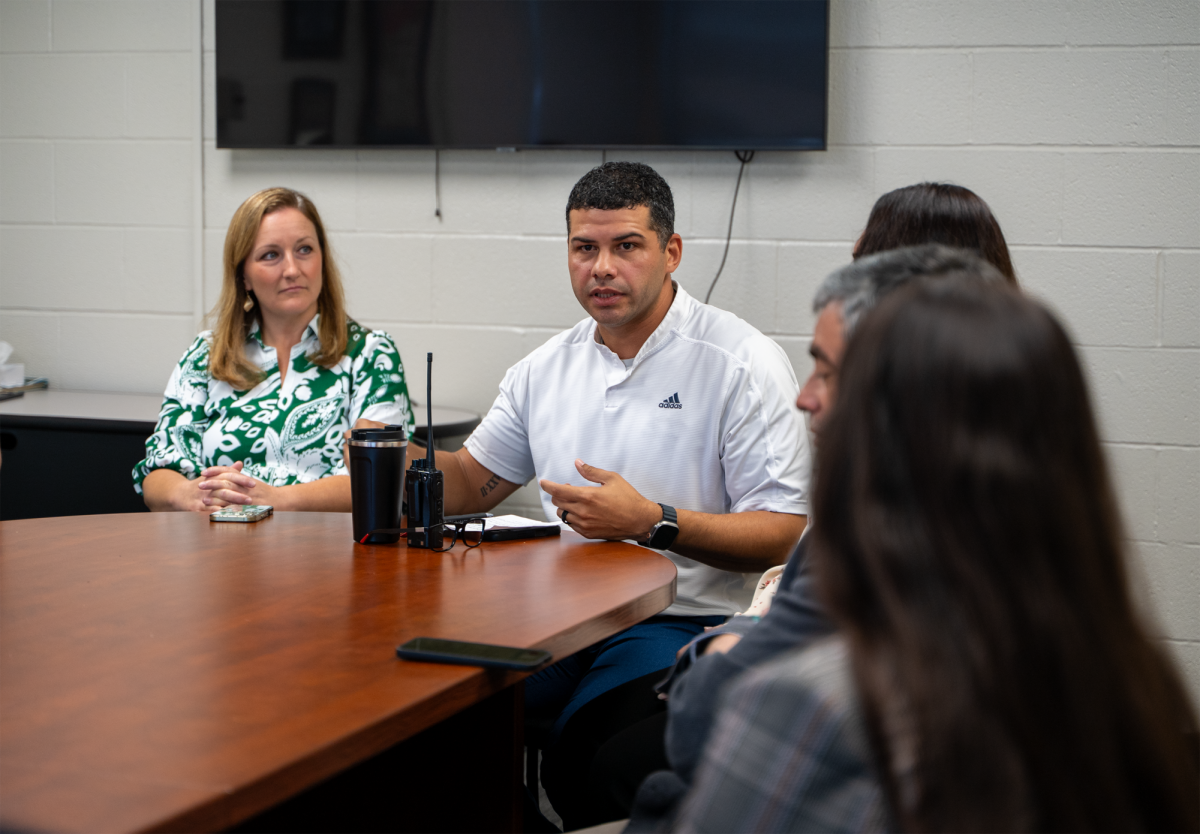
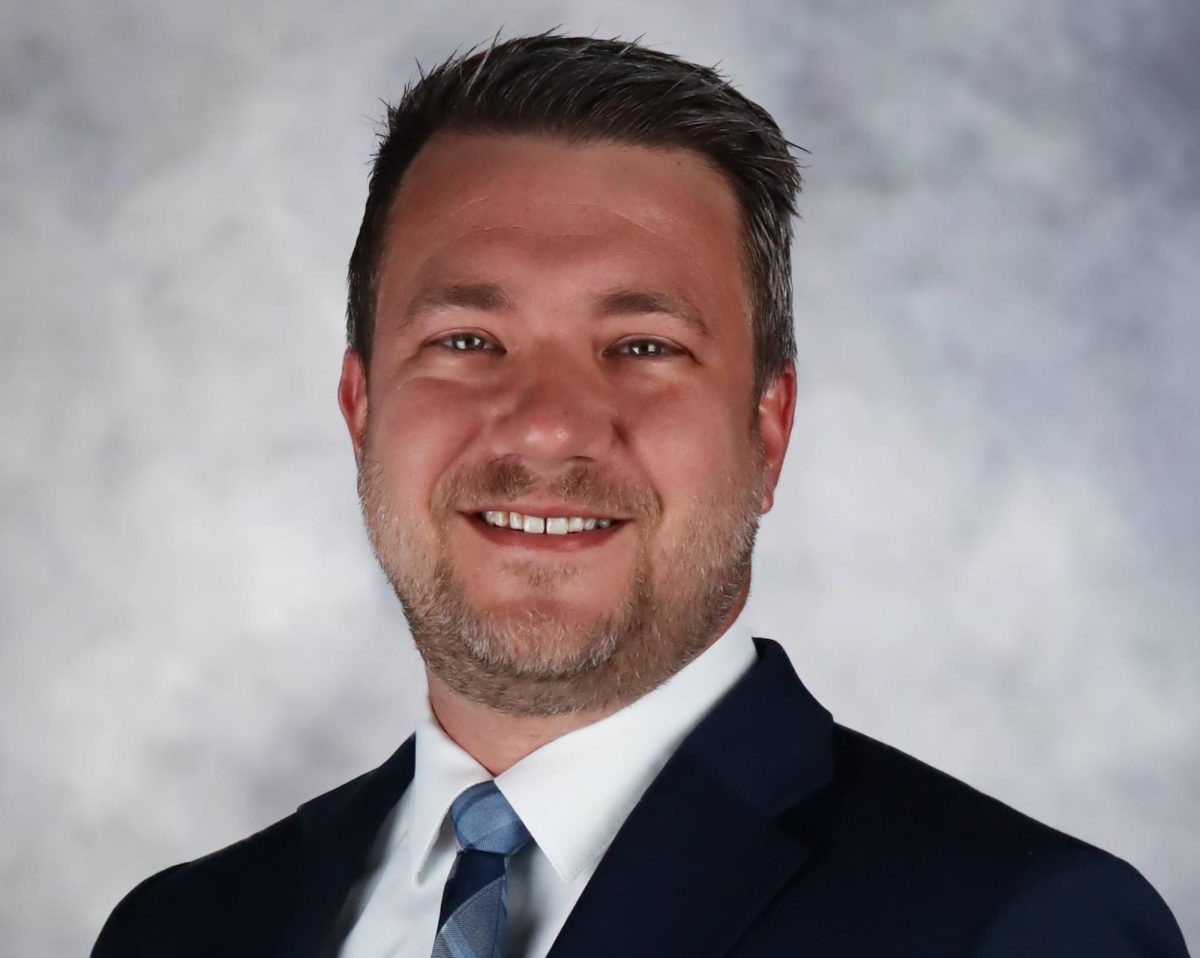
Two newcomers to public office — Cathy “Cat” Summers (D) and Maryellen Murphy (R) — are facing off for the 94th District seat in the Missouri House of Representatives.
This race has no incumbent; Jim Murphy, who has been representing the district for eight years, is term-limited.
Election Day is Tuesday, Nov. 3.
Summers and her husband, John, have three children who attended the Mehlville School District. She is retired and currently serves as a Sunday school teacher and is a member of the Oakville Democratic Organization.
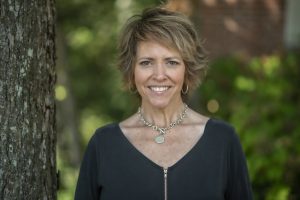
When asked why she is seeking office, Summers said: “To bring attention back to our district that has been ignored for too long. To help allocate funds to our public education, healthcare and cost of living.”
Murphy and her husband, Jim — who previously held the District 94 House seat — have three adult children. She is a retired 30-year small-business owner and is currently involved with South County Police Business Association, STL Agribusiness, Citizen Police Academy Alumni Association, American Marketing Association, Oakville Chamber of Commerce, Explore St. Louis, Saint Margaret Mary Alacoque Parish, Republican Women’s Club of St. Louis and other civic/community organizations.

When asked why she is seeking office, Murphy said: “I want to put my business experience, community involvement and knowledge of Jefferson City to work for the people of South County. My priorities are simple: safe communities, strong education, economic opportunity and responsible government. As a grandmother of 12, I want all of your children and my children and grandchildren to have the opportunity to stay right here in the St. Louis area to build their careers, raise their families and pursue their dreams. South County has been my home for 40 years. I will use my experience and commitment to this community to make sure it remains a great place to live, work, raise a family and call home.”
The candidates gave the following responses to The Call’s candidate questionnaire:
What issue do you consider the most important in this race and why?
Summers: “Cost of living is the biggest issue I hear about as I talk to neighbors. People are afraid of not being able to afford life’s essentials, such as food, gas and healthcare. We must do something to bring the cost of living down.”
Murphy: “The rising cost of living is putting tremendous pressure on working families, seniors and small businesses. My top priority will be making Missouri more affordable by controlling state spending, keeping taxes low and making sure what the government spends is getting the most value for our dollars.”
Other issues you perceive in this race and why:
Summers: “Education is underfunded by $200 million and counting, with an attempt to privatize education and fund it with public tax money. Healthcare, including Amendment 3 — Women’s Healthcare — must be addressed!”
Murphy: “Supporting law enforcement; strengthening schools and workforce training; helping small businesses; and reducing unnecessary government regulation.”
What do you perceive to be your district’s greatest challenges? How will you address these challenges?
Summers: “In District 94, we face several high-priority issues: cost of living, underfunded public education, stagnant wages not keeping up with inflation, high property taxes without much to show for it, quality available healthcare for all, housing crisis, no good jobs or opportunity. Addressing these issues will take time, and I plan to participate in committees that will take solving these issues as a top priority.”
Murphy: “Property taxes. Our property tax assessment process is too inconsistent and subjective. Homeowners should be able to trust that their property is being assessed fairly, accurately, and consistently. We need to address this problem at the state level by modernizing our assessment systems, improving transparency, and establishing clearer, more uniform standards. Property values should be based on reliable data and sound methodology—not on where you live or who happens to assess your property.”
What do you perceive to be the state’s greatest challenges over the next decade?
Summers: “Affordable housing is at the top of mind for many young and not-so-young people. By contrast, in the past, houses could be reasonably paid off, but now you’re lucky to afford rent. The wealth inequality has got to be addressed before we face momentous homelessness and joblessness. AI is something that needs immediate attention to make sure it’s working for the people, not against them. The list of concerns is way too long to list here.”
Murphy: “Building a skilled workforce, maintaining infrastructure, improving access to health care, keeping communities safe and ensuring government remains financially sustainable.”
What is your opinion on Missouri Amendment 3?
Summers: “Stomping out women’s rights, beginning with overturning Roe v. Wade, has started a decline in the Women’s Rights Movements spanning across the country. Protections against rape and incest should not be up to the government. We need to get the overreach of government out of our personal lives and our doctors’ offices. We, as Americans, have the right to be free and choose what we feel is best for us and our families. Women’s healthcare, just like men’s healthcare, should be protected!”
Murphy: “Amendment 3, which passed narrowly in 2024 by 1.3 percentage points, sent a clear message to the legislature: an abortion ban without clear exceptions for rape and incest, and without protection for the health of the mother, is too strict. This new amendment includes all the exceptions the voters asked for. It is now up to them to decide whether it is an acceptable compromise. The unintended consequence of the current law is that it nullified 172 laws that protected women’s health. For example, it eliminated malpractice insurance requirements and all health inspections of abortion facilities and equipment. It also shielded practitioners from prosecution when they cause harm. Those protections, and the rest of the 172 health safeguards, remain in effect for every procedure other than abortion. For these reasons and my personal beliefs, I am supportive of Amendment 3.”
What is your opinion on Missouri Amendment 6?
Summers: “Voting ‘yes’ on 6 will make it harder for government to overturn the will of the people. We obviously need protection, as we have seen with paid sick leave and many other initiative petitions be overturned by the current legislature. Amendment 6 will make it much harder for the will of the voter to be overturned.”
Murphy: “This is a significant change in the balance between direct democracy and representative government. Missouri has three equal branches of government. Our Legislature is the representative branch, meaning the voters in each district elect representatives to speak for them. The current Legislature was elected by 2,720,805 voters. Over the last 10 years, voters have passed seven initiative-petition laws. The Legislature has overturned only one: In 2024, voters approved Proposition A, which included an increase in the minimum wage and requirements for earned paid sick time. In 2025, the General Assembly passed legislation repealing the paid-sick-time provisions, which was an unfunded mandate on small businesses, while leaving the scheduled increase to a $15 minimum wage in place. People can certainly disagree about whether the Legislature made the right decision. But that example illustrates the larger question voters should consider with Amendment 6: When laws are passed in the Legislature, they hold hearings for hours. The public can weigh in, and both sides of the issue are examined. Initiative-petition laws are presented to the public in a 50-word ballot summary and 60-second commercials that give only one side of the issue. The winner is usually the one with the deepest pockets. If passed, Amendment 6 will make it impossible to correct the unintended consequences of a badly drafted law. It will also gut the Legislature’s power to put initiatives on the ballot for voters to approve. If a flawed law is passed, you will not be able to contact your representative for help, because they will not be able to fix it. The current structure of our government already gives voters recourse if the Legislature does not represent their interests. They are called elections. This system has worked for 150 years, and I see no need for this amendment.”
What is your opinion on Missouri Amendment 7?
Summers: “Missouri is currently operating out of a deficit, so where is this money going to come from? The answer is essential services for all of us, just so the money can sit in an account for around 200 years until it’s ready to replace the state’s tax revenue. This is a terrible plan that doesn’t help Missourians now. I’m a ‘no’ vote.”
Murphy: “I’m generally in favor of lowering taxes, but this appears to be a complicated solution. I need more information before I can endorse it.”
What is your opinion on Missouri Amendment 8?
Summers: “In talking to our law enforcement experts, they don’t have a strong opinion on this amendment. We already do this, so it really changes nothing. I’m just tired of this nothing-burger legislation.”
Murphy: “Missouri already has elected county sheriffs. Amendment 8 primarily moves the election requirement, certain duties, and removal protections from statute into the Missouri Constitution. Our constitution is our founding document, not a statute book.”
What is your opinion on Missouri Proposition A?
Summers: “Gerrymandering should be illegal. Politicians should not pick their voters when they feel like it, especially to enforce a corrupt federal agenda. Listen to the people, follow the law. The whole redistricting story with Denny Hoskins should prove how much our state government disregards the average Missourian. It’s a hard ‘no’ from me.”
Murphy: “This proposition does not affect Missouri House or Senate district maps. Per our constitution, they are created by a nonpartisan committee. The legislature should only do congressional redistricting every ten years.”
What process do you favor for redistricting? What do you think of the state’s current redistricting process?
Summers: “There is nothing wrong with the old system of every 10 years of looking at redrawing maps. It should never be done during a political cycle or for political gain or power.”
Murphy: “The U.S. and Missouri Constitutions give the General Assembly responsibility for dividing the state into congressional districts. I believe that responsibility should remain with the elected legislature.”
What will or have you done to work across the aisle in Jefferson City?
Summers: “Making sure public education funds are allocated to the proper places and making sure we are protected from predatory siphoning of funds being marked for private use or being directed by the Archdiocese or other privately held organizations. I want to work on safety in the workplace for nurses. I also want to help protect our public parks and lands and help agriculture/farming to be more sustainable and healthful for our people and planet.”
Murphy: “I believe in listening, treating people with respect and concentrating on solutions.”
What bill would you sponsor as your first legislation post-election?
Summers: “The binding arbitration bill that was dropped at the end of last session is my first priority. This is to protect the first responders union’s ability to negotiate their contracts, health and safety. Concurrently, I would push for funding public education to the degree that we have fully operational schools five days a week with nutritional plans to support those who need it. Also, I will support healthcare for all and address the food and affordability crisis facing our state.”
Murphy: “One of my first priorities will be to file the Taxpayer Protection Act that will strengthen and close loopholes in our current Hancock Amendment. I believe Missouri needs stronger safeguards to control the growth of government spending and protect taxpayers. I will also work to establish reasonable and predictable timelines for issuing permits, while preserving appropriate health, safety and building standards.”
If elected, how would you work to make yourself accessible to your constituents?
Summers: “I currently have my phone number and email address listed so anyone can contact me at any time, and I also plan to send a monthly newsletter to be as transparent as I can possibly be to my constituents. I plan to rebuild trust with my community, and transparency is the only way to do that.”
Murphy: “Being accessible to constituents means being present in the community. I belong to and participate in a number of local civic, business, professional, and community organizations. I find that people will often seek you out for a quiet conversation about an issue or problem when they see you at a meeting, community event, or neighborhood gathering. I will also be holding Town Hall information meetings. Of course, constituents will always be able to reach me through the traditional channels of phone and email.”
How will you advocate for the needs of your district in the legislature?
Summers: “I will listen to them and address what they see as a problem. Such as people standing on corners and cutting through traffic to ask for money, making my constituency concerned about safety. There’s been lots of talk about roadwork and reducing speed, so I am anxious to work with the Transportation and Infrastructure Committee to advocate for changes that make sense for everyone.”
Murphy: “Effective representation starts with knowing the people and institutions that make our community work. Through my years of community involvement, I have developed relationships with local business leaders, school superintendents and educators, first responders, civic organizations and local officials. I will stay in regular contact with these leaders and, most importantly, with the residents of District 94 to understand the issues affecting South County.”
What is your opinion on Flock Safety and other automated license plate reader (ALPR) systems?
Summers: “We have seen how Flock cameras can benefit us by helping capture dangerous people or incidents. However, we have also seen how it could hurt us as a community and as individuals with the extensive data collection and the cases of misuse. We need to talk about these quickly and be willing to discuss safeguards until our community feels safe.”
Murphy: “I support giving law enforcement effective crime-fighting tools while protecting the privacy of law-abiding citizens. ALPR systems should have clear limits on access, data retention, and have substantial penalties for sharing and misuse.”
What are your thoughts on data centers? Do you support a statewide construction moratorium, permanently or temporarily, on large data centers?
Summers: “Anything we build here should be to the benefit of all, not just some. We need to analyze and understand the pros and cons that AI data centers would bring to our communities before committing to anything. Therefore, we need to take time to educate ourselves about what is required before making any decisions.”
Murphy: “I am not a big fan of data centers in populated areas like South County. Projects should have community input and a transparent process. Families and existing businesses should not bear the infrastructure costs, and residents should not pay higher utility rates.”
Do you have an opinion on Missouri’s new requirements for Supplemental Nutrition Assistance Program (SNAP) benefits?
Summers: “My opinion is that we should not be starving children and handicapped people who depend on these programs to live and feed themselves. We need a politics that rethinks the way these programs are monitored and improves upon the systems we have to better serve the people who need them and, ideally, help people obtain the level of independence they want. Hand up, not hand out.”
Murphy: “SNAP should help eligible families while maintaining program integrity. New requirements should be understandable, workable and should not unnecessarily prevent eligible seniors, people with disabilities or struggling families from receiving assistance. Missouri is implementing new verification requirements, while its Healthy SNAP food restrictions are now scheduled for February 15, 2027.”
Do you have an opinion on Missouri’s new law banning intoxicating hemp products?
Summers: “I think regulatory systems should be put in place to prevent harmful additives, and age limits for purchasing any ‘altering’ substance should be followed.”
Murphy: “I am in favor of the bill passed by the General Assembly as it complies with the new federal law.”
What are your thoughts on MOScholars, Missouri’s private school voucher program?
Summers: “My thoughts are that if you choose to send your child to a private school, I totally support your choice. However, our public school funds should be protected and preserved for the families who choose to send their children to public school so that we can provide them with the highest available education possible. Missouri is 49th in education, which is unacceptable, and we can help fix this by allocating money appropriately and using that money wisely.”
Murphy: “I support giving parents educational choices that best meet their children’s needs, while maintaining accountability for taxpayer-supported programs. MO Scholars uses private contributions, supported by state tax credits, to provide scholarships, including for students with IEPs and qualifying lower-income families. These funds can be used for a public-school student as well as a private-school student. The Legislature has provided $80 million in General Revenue for the program, and that amount was not deducted from the DESE budget. All children need an education built around how they learn. Education should be directed toward the child, not just the institution.”
Are changes needed to the state’s foundation formula for funding education?
Summers: “Yes! Visible demise, as underfunding continues. By the mid-2010s, analysts began calling the formula inequitable and outdated, but the state did not update the baseline. By doing this, we continue the frozen 2005 baseline, increasingly distorting district wealth and disbursement of public funding. Reform is needed immediately.”
Murphy: “Education funding in Missouri was designed to come primarily from local property taxes. The state is required to devote 25 percent of general revenue to supplement that local funding. The foundation formula was built to make sure every child in the state has access to a quality education. By design, it distributes resources based on need. Districts with a small tax base receive the bulk of state funding because they do not have the local resources to provide a quality education on their own. Mehlville and Lindbergh receive a relatively small share of state funding because we have a larger tax base. Even so, programs mandated by the state are costly. I will make sure our school districts are not shortchanged by any changes to the formula.”
What will you do to improve Missouri’s economy?
Summers: “Flat wage growth and lack of increases since the 2000s have greatly impacted the ability of workers to keep up with the rising costs and taxes on everyday goods and services. I will advocate for more specialized skills training and professional development to fill the demand for skilled labor, and I believe educating our population will attract businesses looking for high-quality talent. Strong workers make for strong business and a strong economy.”
Murphy: “Support small businesses, keep taxes competitive, reduce unnecessary regulation, improve infrastructure and continue to support the schools and prepare students as the skilled workers employees need.”
What are your thoughts on the state’s immunization laws?
Summers: “With the current outbreak of measles and all kinds of other ailments, we need to have science-backed information for Americans to base their decisions on and not hearsay. Currently, Americans are confused about what is fact and what is opinion. We need to build back trust and faith in the institutions that people rely on to make these important decisions.”
Murphy: “Missouri currently requires specified childhood immunizations for school attendance while allowing medical and religious exemptions.”
What changes, if any, should Missouri make to its health-care system?
Summers: “Healthcare should be a human right, especially in the wealthiest nation on the planet. There is no reason why we can’t take care of our people and prevent unnecessary suffering. We need to build upon the systems that work and reinvent those that don’t. The greed of this country has kept it sick and needy; we are at the time and place to address these issues.”
Murphy: “We need to find ways to make the system more efficient to lower costs, but much of health care costs are not handled at the state level. Missouri enacted expanded telehealth, licensing reciprocity and community-paramedicine provisions in 2026.”
Would you support legislation to facilitate a merger of St. Louis County and St. Louis city?
Summers: “I will review any legislation regarding a merger; however, I will only approve plans that benefit both the county and the city.”
Murphy: “I would not support a state-imposed merger. Any proposal should clearly demonstrate benefits for residents and should be decided by the people directly affected.”
What do you think of the leadership of Gov. Mike Kehoe?
Summers: “Kehoe has been tone deaf to what Missourians actually want and need, and I don’t see that changing. Under his watch, our state has suffered so many steps backwards that it’s hard to calculate the total cost and damage.”
Murphy: “Governor Kehoe’s stated priorities include public safety, education, economic development and agriculture. I support all of those priorities.”
What do you believe are the core responsibilities for someone elected to this office?
Summers: “Listening to what people prioritize and communication are the most important skills to have in this position. Working through party lines and being transparent to your constituency are essential, and that is my promise to provide the people who elect me.”
Murphy: “Listen to constituents, provide responsive constituent service, protect taxpayers, carefully review legislation and the budget and make sure the district has a strong voice in Jefferson City. As a representative, you have to take the issues of your district and work them into the State of Missouri as a whole.”
Have you been endorsed by any groups/organizations?
Summers: “To name a few: AFL-CIO, International Association of Fire Fighters, Senator Doug Beck, Fraternal Order of Police, National Women’s Political Caucus, Access MO, Teamsters Joint Council 13, ODO, International Brotherhood of Electrical Workers Local 1, Moms Demand Action, UFCW Local 655, and lots more.”
Murphy: “Law Enforcement, Police Chiefs Coalition, St. Louis County Police Association. Advocacy & Professional Organizations, Missouri Right to Life, Missouri Hospital Association, Americans for Equal Shared Parenting (AFESP), National Rifle Association (NRA), National Federation of Independent Business (NFIB), Missouri Nurses Association, Missouri Chamber of Commerce and Industry.”
Editor’s note: The following questions are as they were submitted to The Call by the candidates in their entirety. They have not been edited in any way, other than to ensure appropriate language and no direct attacks on opponents or other candidates.