A bill aimed at curbing the use of automatically recurring campaign donations — a fundraising tactic employed by a prominent GOP candidate — won first-round approval without opposition on Feb. 4 in the Missouri House.
The bill, sponsored by state Rep. Jim Murphy (R-Oakville), would prohibit political candidates from setting up recurring contributions without explicit authorization from donors. It also would require campaigns to shut off recurring donations once an election is over.
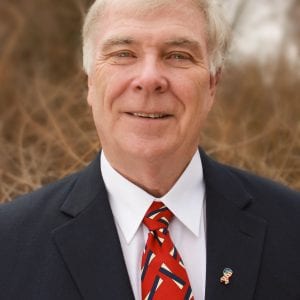
Murphy didn’t mention the inspiration for the bill by name on Wednesday, but he’s made no secret that he filed the legislation after reading a report by The Independent on Bill Eigel’s fundraising strategy.
Eigel started using automatic, recurring donations in 2023, when Eigel was seeking the Republican nomination for governor and were restarted when he launched a campaign for county executive in St. Charles County.
Murphy wrote the bill, he told the chamber, when he read The Independent’s report that a Nebraska veteran who first donated to Eigel in 2023 had been tapped for $2,200 overall and $1,050 in 35 separate donations between December 2024 and the end of September.
“I said this is really something we can’t have in the state of Missouri,” Murphy said.
The bill won first-round approval on a voice vote and needs a roll call vote to send it to the Senate. No member spoke against the bill and there were no audible “no” votes on passage.
A recurring donation would only be legal if the contributor gives “affirmative consent.” If the solicitation is designed to create an automatic donation via checkbox or other means, failure to uncheck the box would not be sufficient.
Other rules governing online solicitations would:
- Require the solicitation to state prominently which candidates or causes would benefit from the donation and the share each would receive;
- Require immediate refunds for donations from recurring contributions that were not authorized by the donor;
- Provide the donor a receipt after each donation stating the frequency and duration of the recurring contributions, with information on how to terminate the donations before the next draw;
- Allow the Missouri Ethics Commission to fine campaigns up to 100 times the amount of each recurring donation accepted in violation of the law.
The veteran, 92-year-old Russell Wood of Cambridge, Nebraska, said in an October interview with The Independent that he was aware of his initial donation to Eigel but had not intended it to be recurring. He also did not know that the donations were continuing in 2025.
Wood said he didn’t recall making any donations this year, “and if I did, it wasn’t to anybody in Missouri.”
The latest campaign finance report from Eigel’s campaign committee does not show any donations from Wood after Sept. 29. It does show continuing donations from others among 141 people nationally — including six from Missouri — who made multiple donations to Eigel’s campaign for governor and reappeared when his committee was restarted for the county executive race.
One woman from Texas contributed 98 times to Eigel’s current campaign, providing $1,600, including 24 donations in the final three months of last year.
During his run for governor, Eigel’s fundraising tactics drew the ire of President Trump’s campaign, who complained Eigel was using his name to raise money without permission. Those solicitations, the St. Louis Post-Dispatch reported in September 2023, convinced a woman in Arizona to send $10 to a PAC backing Eigel that she later found was a recurring donation.
And, she told the newspaper, she had never heard of Eigel and doesn’t follow Missouri politics.
The bill debated on Feb. 4 would only apply to candidates for Missouri state offices and campaign committees for state ballot questions. It would not apply to candidates for federal office because those donations are regulated under federal law by the Federal Election Commission.
The use of a pre-checked box to turn single donations into recurring donations has been incorporated into fundraising strategies for Democrats and Republicans and are often missed by unsophisticated donors, especially retirees.
Other states have proposed similar bans. Pennsylvania’s legislature considered a ban on the fundraising tactic in 2023, but it didn’t advance very far. New Jersey lawmakers pushed for a ban last year after reports in Politico about the fundraising of a Republican candidate for governor.
And the Federal Election Commission recommended a federal ban on pre-checked recurring donations in 2021 but Congress has not acted.
During debate on Feb. 4, state Rep. Eric Woods, a Democrat from Kansas City, said fundraising solicitations use scare tactics and deceptive language to trigger a response.
“It would be a situation where folks thought that maybe they were supporting the President or supporting some party organization, and instead that money was being siphoned off at a high percentage to this candidate’s campaign,” Woods said.
The people being tapped for funds are often people who can’t afford large contributions, he added.
“It really cost a lot of innocent people who thought they were supporting causes they believed in a lot of money,” Woods said. “And I think, frankly, that’s fraud.”
Missouri Independent is part of States Newsroom, a nonprofit news network supported by grants and a coalition of donors as a 501c(3) public charity. Missouri Independent maintains editorial independence. Contact Editor Jason Hancock for questions: info@missouriindependent.com.